
Equity benchmark indices Sensex and Nifty settled lower for the sixth straight session on Monday due to heavy selling in bellwether stocks including HDFC Bank and Reliance Industries amid mixed trends in the global markets and outflow of foreign funds. Falling for the sixth consecutive session, the BSE Sensex tumbled 638.45 points or 0.78 per cent to settle at 81,050. During the day, it plummeted 962.39 points or 1.17 per cent to 80,726.06. The NSE Nifty slumped 218.85 points or 0.87 per cent to end at 24,795.75.

ICICI Bank was the top gainer in the Sensex pack, soaring nearly 11 per cent, followed by Axis Bank, Dr Reddy's, SBI, M&M and Tech Mahindra. NSE Nifty advanced 10.50 points to 18,125.40.

Data from Amfi shows that NAV of every one in two BAFs declined 1.5% or less on Monday compared to a 3.13% decline in Nifty 500.

Trading in stock markets this week will be majorly influenced by the upcoming quarterly earnings from IT majors TCS and Infosys, along with global trends, analysts said. Besides, global oil benchmark Brent crude, rupee-dollar trend and trading activity of foreign investors would also dictate the movement, they said. "On the domestic front, all eyes will be on the beginning of corporate performance for the third quarter of the current fiscal year.

Foreign portfolio investors (FPIs) have pulled out Rs 17,696 crore from the Indian markets in December so far amid uncertainty due to a new coronavirus strain, Omicron, and expectations of faster tapering by the US Federal Reserve. According to the depositories data, FPIs took out Rs 13,470 crore from equities, Rs 4,066 crore from the debt segment and Rs 160 crore from hybrid instruments between December 1-17. In November, FPIs were net sellers to the tune of Rs 2,521 crore in Indian markets.

The net inflows into active equity mutual fund (MF) schemes registered more than a twofold month-on-month rise in August, crossing Rs 20,000 crore, the highest in five months. This rise in net inflows was boosted by an 18 per cent growth in gross investments, driven by a record Rs 15,800 crore inflow through the systematic investment plan (SIP) route and Rs 5,000 crore collected by seven new fund offers (NFOs) in the active equity space, reveals data released by the Association of Mutual Funds in India (Amfi). Moreover, redemptions moderated in August, declining by 19 per cent to Rs 24,580 crore, after staying elevated in the previous three months owing to profit booking.

'Regardless of whether you invest Rs 100 or Rs 1 crore per month, risk is inevitable.' 'Positive returns at the end of the year can never be guaranteed.' 'This is a fundamental truth every SIP investor must grasp.'

ICICI Bank, HUL, HDFC Bank, M&M, Ultra Cement, IndusInd Bank and Tech Mahindra were among the losers in the Sensex pack. NSE Nifty slipped 13.95 points to 17,355.30.

From the 30 Sensex firms, Power Grid, ICICI Bank, Bharti Airtel, HDFC Bank, Kotak Mahindra Bank, Larsen & Toubro, Adani Ports and UltraTech Cement were among the laggards. Sun Pharma, Reliance Industries, Titan, HCL Technologies and Bajaj Finserv were among the biggest gainers.

Investors' wealth on Monday surged Rs 4.21 lakh crore as markets bounced back after five days of fall. The BSE Sensex jumped 602.75 points or 0.76 per cent to settle at 80,005.04. During the day, it surged 1,137.52 points or 1.43 per cent to 80,539.81.
From the 30-share blue-chip pack, Adani Ports jumped over 5 per cent. NTPC, Tata Steel, Bajaj Finserv, Zomato, Bajaj Finance, Tata Motors, State Bank of India, IndusInd Bank and Maruti were among the other big gainers. From the 30-share pack, Hindustan Unilever, Titan, Tata Consultancy Services, Infosys and UltraTech Cement were the other laggards.

'Allocate up to 20 per cent of your core equity portfolio to quality funds.'

Quarterly earnings and global cues will be the major sentiment driver for the equity market this week, according to analysts. Of late, Benchmark indices have been on a record-breaking run. "Quarterly results will dictate market sentiment and will be the talk of this week as they pick up the pace. "D-Street will be all ears to any management insights to forecast the future earnings trajectory.

The ratio of market capitalisation to gross domestic product (GDP) in India remains elevated despite the recent correction in the equities markets. It was 147.5 per cent on December 3, 56 per cent higher than the 10-year average of 94 per cent. The current ratio is slightly lower than the all-time high ratio of 154 per cent at the end of September this year.

From the 30 Sensex firms, Larsen & Toubro, Reliance Industries, Axis Bank, Asian Paints, Tata Motors, Bajaj Finance, Maruti, Bajaj Finserv, Kotak Mahindra Bank, Titan, Adani Ports and HDFC Bank were the major laggards. JSW Steel emerged as the only gainer.
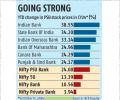
Stock Market News today, PSU banks: The year 2024 was a roller-coaster ride for Indian stock markets, marked by volatility driven by the Lok Sabha elections, Union Budget 2024, a slowdown in corporate earnings, and sticky inflation. Geopolitical tensions - particularly between Israel and Iran in West Asia - along with various stimulus announcements by China and yen carry trade rocked the equity markets throughout the year.

While the four largest listed paint companies have seen marginal negative returns, the S&P BSE Fast Moving Consumer Goods (FMCG) and the National Stock Exchange Nifty FMCG indices have delivered a solid 16 per cent return during the same period. Initially, volume growth and reduced costs bolstered the sector's sentiment, but brokerages have grown cautious due to increased competitive pressures.

From the 30 Sensex firms, Mahindra & Mahindra, Infosys, Kotak Mahindra Bank, JSW Steel, Adani Ports, Tata Motors, Adani Ports, ITC and Titan were the major laggards. HDFC Bank, Bharti Airtel, Reliance Industries, Asian Paints and State Bank of India were the gainers.

The primary market is expected to remain vibrant, with at least 10 companies, including supermart major Vishal Mega Mart and Blackstone-owned diamond grading firm International Gemmological Institute (India) Ltd expected to raise a combined Rs 20,000 crore in the next month, merchant bankers said. Education-focused NBFC Avanse Financial Services, TPG Capital-backed Sai Life Sciences, hospital chain operator Paras Healthcare, and investment bank DAM Capital Advisors are also among the companies planning to launch their IPOs in December, they added. The companies aim to raise a total of Rs 20,000 crore through their public offerings.

Most of the Sensex firms settled in the positive territory. Mahindra & Mahindra, Tata Motors, Tech Mahindra, JSW Steel, State Bank of India, HCL Technologies, Reliance Industries and Infosys were the biggest gainers. Kotak Mahindra Bank and Maruti were the laggards.

Among the 30 Sensex firms, Bajaj Finance, Infosys, Adani Ports, JSW Steel, HCL Tech, Bharti Airtel, IndusInd Bank and Tata Motors were the biggest laggards. ICICI Bank, Bajaj Finserv, Titan, Nestle and HDFC Bank were among the gainers.

The Reserve Bank of India's (RBI's) interest rate decision, West Asia conflict and trading activity of foreign investors are the key factors that will dictate investors' sentiment in the market this week, analysts said. Moreover, quarterly earnings from IT bellwether TCS, domestic macroeconomic data and movement in global oil benchmark Brent crude would also guide trends in the market. Worsening tensions in the Middle East and foreign fund outflows were the major culprits behind the equity markets sharp fall last week.

The ongoing fourth quarter earnings season, global factors and macroeconomic data would guide the trends in the equity markets this week, analysts said. Markets would also take cues from trading activity of foreign investors, rupee-dollar trend and movement of global oil benchmark Brent crude. "Domestically, the next batch of Q4 earnings reports will drive stock-specific movements, Hero MotoCorp, Larsen & Toubro, BPCL, State Bank of India, Eicher Motors and Tata Motors are some of the big names in the list and the next phase of voting," said Pravesh Gour, senior technical analyst, Swastika Investmart Ltd.

Mahindra is coming up with the Thar Roxx. MG Motor India announced a third electric vehicle Windsor. Hyundai and Kia are expected to introduce updated versions of the Alcazar and Carnival respectively.
Adani Ports was the biggest loser in the Sensex pack, declining 1.37 per cent, followed by ITC, Bharti Airtel, NTPC, Maruti, Asian Paints, Sun Pharma, Power Grid, Hindustan Unilever and Larsen & Toubro. In contrast, Bajaj Finserv, Bajaj Finance, IndusInd Bank, Tata Steel, Axis Bank and Tech Mahindra were among the gainers.

Among the Sensex firms, Titan, Asian Paints, ITC, Hindustan Unilever, Nestle India, Bajaj Finserv and Bharti Airtel were among the gainers. In contrast, UltraTech Cement, Tech Mahindra, Tata Steel, Power Grid, HDFC Bank, HCL Technology, State Bank of India and ICICI Bank were the laggards.
Among the 30-share Sensex blue-chip pack, Bharti Airtel, ITC, Kotak Mahindra Bank, Hindustan Unilever, Titan, UltraTech Cement, HCL Technologies, and Power Grid, were the biggest gainers. Tata Steel, IndusInd Bank, JSW Steel and Bajaj Finserv were the laggards.

From the 30-share Sensex pack, Tata Consultancy Services and Infosys jumped over 4 per cent each. HCL Technologies, Tech Mahindra, Adani Ports, Larsen & Toubro, Maruti and Reliance Industries were also among big gainers. Titan, IndusInd Bank, Hindustan Unilever, Axis Bank and HDFC Bank were the laggards.

The November 5 US presidential elections, Federal Reserve interest rate decision, trading activity of foreign investors, and the upcoming quarterly earnings from domestic firms are the major triggers that would influence sentiments in the equity market this week, analysts said. In an eventful week ahead, a host of macroeconomic data announcements and global trends would also drive the markets, experts said. "The upcoming week is poised to be eventful on the global front.

From the 30 Sensex firms, Tata Consultancy Services and HCL Technologies dropped over 3 per cent each. Infosys, Tech Mahindra, Sun Pharma and Tata Motors were the other major laggards. Bajaj Finance, Bajaj Finserv, Nestle, HDFC Bank, ICICI Bank and State Bank of India were among the biggest gainers.

The global COVID-19 situation, rollout of vaccines, geopolitical trends, Union Budget and economic recovery would be the major factors driving investor sentiments in 2021 after a tumultuous year which saw both 'the worst of times and the best of times' for the stock market, said analysts. What a year 2020 turned out to be! From witnessing gigantic losses to record-shattering gains, investors went on a roller-coaster ride amid the coronavirus pandemic and massive stimulus measures. Markets closed 2020 with remarkable gains of around 16 per cent, but will the winning ways continue in 2021 as well?

'As the markets are expected to remain jittery in the near term, we advise investors to use this opportunity to enter quality largecaps from a long-term perspective.'
Macroeconomic data announcements, the last batch of Q1 earnings and global trends are the major factors that would influence trading sentiments in the equity market in a holiday-shortened week ahead, analysts said. Besides, trading activity of foreign investors would also be a crucial factor in dictating movement in the market. Equity markets would remain closed on Thursday for Independence Day.

Benchmark equity indices Sensex and Nifty pared early gains to settle lower on Wednesday due to late selling in index major Reliance Industries, ITC and HDFC Bank even as the RBI took the first step towards a rate cut in its monetary policy review. Erasing its early gains, the 30-share BSE Sensex fell 167.71 points or 0.21 per cent to close at 81,467.1. During the day, it surged 684.4 points or 0.83 per cent to hit an intra-day high of 82,319.21.
Mutual funds (MFs) invested a record Rs 1.73 trillion in equities in the financial year 2022-23 (FY23), providing strong support to the Indian markets at a time when foreign investors were redeeming their holdings. They exceeded the previous high of nearly Rs 1.72 trillion investment in equities in FY22. The data from the Securities and Exchange Board of India (Sebi) shows MFs were net buyers in the equity market in eleven of the twelve months last financial year.

The US Federal Reserve's interest rate decision is the biggest event that would drive sentiments in the domestic stock market this week, besides a host of macroeconomic data from the global front and trading activity of foreign investors, analysts said. The Indian equity market had an exceptional last week, with both the Nifty and Sensex hitting their all-time high levels on Thursday.

Madhabi Puri Buch, the first female chairperson of Sebi, doesn't plan to rest on her laurels in her third and final year in office and has set out an ambitious goal, such as moving towards a same-day and instantaneous settlement cycle for the secondary market.
Global trends, the last batch of Q2 earnings and domestic macroeconomic data will dictate terms in the equity market, which had an extended weekend last week, analysts said. "FIIs' behaviour along with inflation numbers from US and China will remain key factors for this week. After an extended weekend, Indian markets are likely to start a fresh week with a positive note on the global backdrop. "However, there is a risk of selling pressure at higher levels as we are underperforming the global peers where the near-term texture has changed to 'sell on rise' from 'buy on dip'," Santosh Meena, head (research) at Swastika Investmart Ltd, said.

Market chatter suggests that the BJP could win fewer than 300.

IndusInd Bank was the top gainer in the Sensex pack, soaring over 7 per cent, followed by Bharti Airtel, HCL Tech, Tata Steel, Tech Mahindra and Dr Reddy's.
 © 2026 Rediff.com - Advertise with us - Disclaimer - Privacy Policy - Sitemap - Feedback - About us - Terms of use - Grievances